
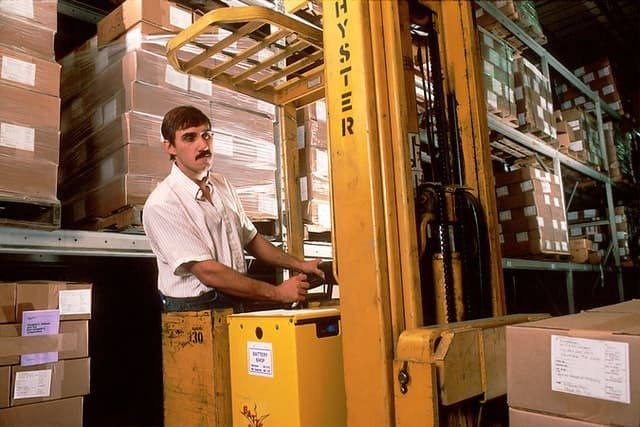
When launching a new business or expanding a small warehouse, managing material handling efficiently is a top priority. Many business owners turn to a walkie stacker as a smart, cost-effective alternative to heavy traditional forklifts. These pedestrian-controlled electric units help you lift, transport, and organize inventory without taking up excess space.
Designed primarily for indoor applications, walkie stackers allow companies to maximize vertical storage in tight aisles and congested work areas. To invest in one of the best Walkie stackers in Melbourne, you can explore reliable providers that offer flexible options for both purchase and hire. Understanding how these machines work will help you choose the right equipment for your facility.
Weight and Capacity
Walkie stackers generally weigh between 2,000 to 2,500 pounds on their own, depending on the model and battery size. When calculating load limits, you must factor in the weight of the pallets along with the goods stacked on top of them. Modern models often feature advanced electrical systems and AC drive motors that ensure smooth acceleration and steady travel across smooth warehouse floors.
Who Should Choose A Walkie Stacker
The total weight of your inventory is the primary variable when selecting this machine. If your operations require moving exceptionally heavy industrial parts, a pedestrian stacker might not provide enough muscle. However, for light-duty to medium-duty storage tasks, these tools offer an economical alternative to traditional fork trucks.
You also need to consider the physical dimensions of your cargo. Facilities that store goods at heights up to 192 inches with minimal travel distances benefit greatly from these compact devices. For guidance on optimizing daily workflows, reviewing 4 Essential Small Business Tools can help streamline your inventory management process.
Fixed Straddle, Adjustable Straddle, And Fork Over
Pallet lifters come with base legs in three distinct configurations. Selecting the right type depends on your pallet styles and warehouse layout:
- Fixed Straddle: The inside dimension of the straddle legs must be larger than the width of your largest pallet to keep the equipment stable during lifting.
- Adjustable Straddle: These legs can be widened or narrowed by several inches, making them adaptable to a wider variety of pallet sizes.
- Fork-Over: The legs sit directly beneath the forks, which means this configuration only works with open-bottom pallets.
License and Certification Requirements
Because walkie stackers are pedestrian-operated lift trucks, they often have different regulatory requirements compared to ride-on forklifts. In many regions, you might not technically need a formal state license to operate a pedestrian pallet stacker. Even so, most employers require proper operator certification based on internal safety policies and local occupational health standards. Ensuring your team completes proper safety training prevents workplace accidents and keeps operations running smoothly. For more insights on organizing your workspace, take a look at helpful guides like How to Make Your Cosy Home to inspire better organization habits.
To learn more about industrial equipment safety standards, you can visit the Occupational Safety and Health Administration website.
Integrating a walkie stacker into your business operations reduces manual handling and improves overall productivity. Investing a modest amount into reliable material handling equipment yields long-term positive results for your business growth.
Frequently Asked Questions
1. What is the difference between a forklift and a walkie stacker?
A walkie stacker is a pedestrian-controlled electric machine designed for indoor use and tighter spaces, while a traditional forklift is a larger, ride-on vehicle built for heavier loads and outdoor terrain.
2. Do I need a license to operate a walkie stacker?
While formal licensing laws vary by region, most workplaces require operators to complete a safety certification course before using any motorized material handling equipment.
3. Can walkie stackers be used with all types of pallets?
Not necessarily. Fork-over stackers require open-bottom pallets, whereas straddle stackers can accommodate closed-bottom pallets as long as the base legs fit correctly around them.
4. How high can a walkie stacker lift materials?
Many standard electric pallet stackers can reach vertical storage heights of up to 192 inches, making them ideal for optimizing vertical warehouse space.
5. What powers a typical walkie stacker?
Most modern walkie stackers rely on a rechargeable electrical system, often featuring efficient 24V batteries and AC drive motors for smooth acceleration.